Most lists of the best CRM for startups assume you're already selling. But a pre-revenue startup is usually running two pipelines at once: a fundraising pipeline (investors, intros, follow-ups) and an early sales pipeline (first design partners, pilots, LOIs). You don't need a sales department's software to track either — you need something that remembers every conversation, surfaces the next step, and doesn't charge you per founder.
This guide covers what a startup actually needs from a CRM, how to run an investor pipeline and a sales pipeline side by side, and what to defer until you've hired a real sales team. If you want the shorter version focused on avoiding free-tier traps, we've also written the free CRM for startups: what to use and what to avoid — this one goes deeper on the fundraising side.
Why per-seat pricing is the wrong deal at seed stage
Here's the trap. You're three cofounders. A CRM that's "free for one user" or "$15/seat/month" sounds cheap until all three of you need to see who last emailed which angel. Suddenly it's $45/month, you're entering card details for a tool you're still evaluating, and the "free" plan has a 1,000-contact cap you'll hit the week you export a conference attendee list.
At this stage, your constraint is runway and attention, not money saved on software. The right test isn't "which has the most features" — it's:
- Can the whole founding team get in without paying per seat? Fundraising is a team sport; everyone needs the shared history.
- Will your data stay yours? You should be able to export everything to CSV on day one, so switching later is never held hostage.
- Can you stand it up in an afternoon? Anything that needs a week of configuration is stealing time from the raise.
If you want to pressure-test the broader market first, our how to choose a CRM guide lays out six core capabilities and the red flags to watch for.
Running an investor pipeline
An investor pipeline is just a sales pipeline where the "deal" is a check and the "customer" is a fund. The mechanics are identical, which is why a general CRM handles it well. Create a dedicated pipeline with stages that match how a raise actually moves:
| Stage | What it means |
|---|---|
| Researching | On your target list, no contact yet |
| Intro requested | Asked a mutual connection to introduce you |
| First meeting | Initial call booked or done |
| Diligence | Follow-up meetings, data room, partner meeting |
| Term sheet | Offer on the table |
| Committed / Passed | Won or lost, with a reason noted |
The value field on each deal becomes their likely check size, so a glance at the board tells you how much soft-circled capital you're tracking toward your target. With a sales pipeline that gives you unlimited pipelines and custom stages, you build this in a few minutes and drag cards across as conversations progress.
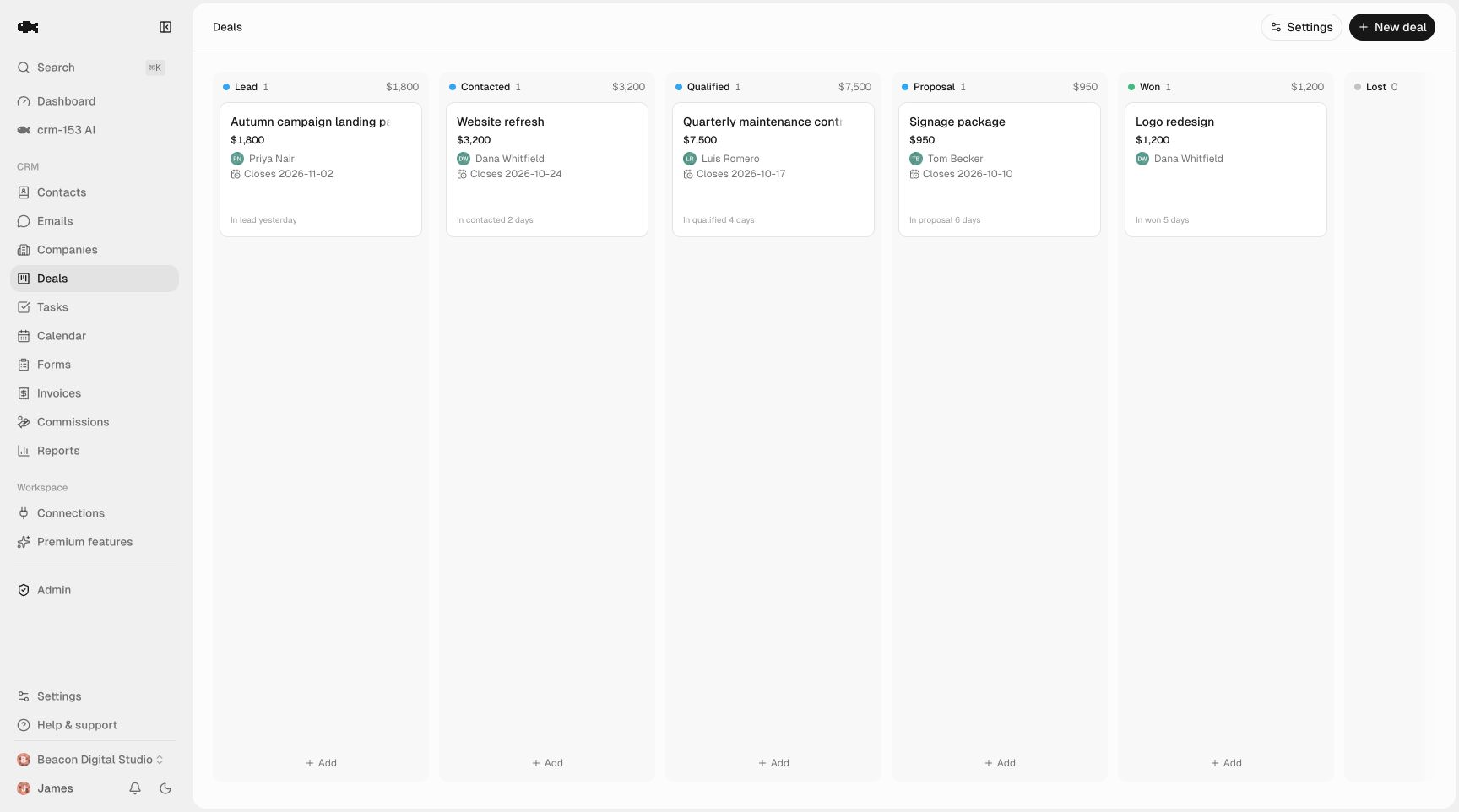
The part that actually wins rounds isn't the board, though — it's the follow-up. Investors go quiet; the founder who re-engages at the right moment, with context, stands out. Log every call and note on a shared activity timeline so any cofounder can see that a partner asked about your churn two weeks ago, and set a task to circle back before the meeting goes cold.
Running the first-sales pipeline alongside it
Keep your early sales motion in a separate pipeline from investors. They move on different clocks and you'll want to look at them independently. Early-stage sales stages might be:
- Discovery — found a potential design partner
- Problem confirmed — they've agreed the pain is real
- Pilot scoped — you've defined what a trial looks like
- In pilot — actively using your product
- Committed — signed, paying, or an LOI
Two pipelines, one contact database. When an angel also wants to be a customer (it happens more than you'd think), both deals live on the same contact record. For building out the sales side thoughtfully, how to define sales pipeline stages that match how you actually sell is worth a read — the discipline around stage boundaries and won/lost hygiene matters more than the tool.
What to set up on day one
Don't over-engineer. The minimum viable startup CRM:
- Import your lists. Angel lists, warm intros, waitlist signups — dump them in via CSV import, which dedupes by email so your messy exports don't create doubles.
- Tag by relationship. Tags like
investor,design-partner,advisor,waitlistlet you filter instantly. Contact management gives you unlimited contacts and companies, so there's no reason to trim the list. - Build the two pipelines described above.
- Add every cofounder. Shared visibility is the whole point — unlimited team seats means you're not rationing logins.
- Set follow-up tasks as you go. Every meeting ends with a next step and a due date.
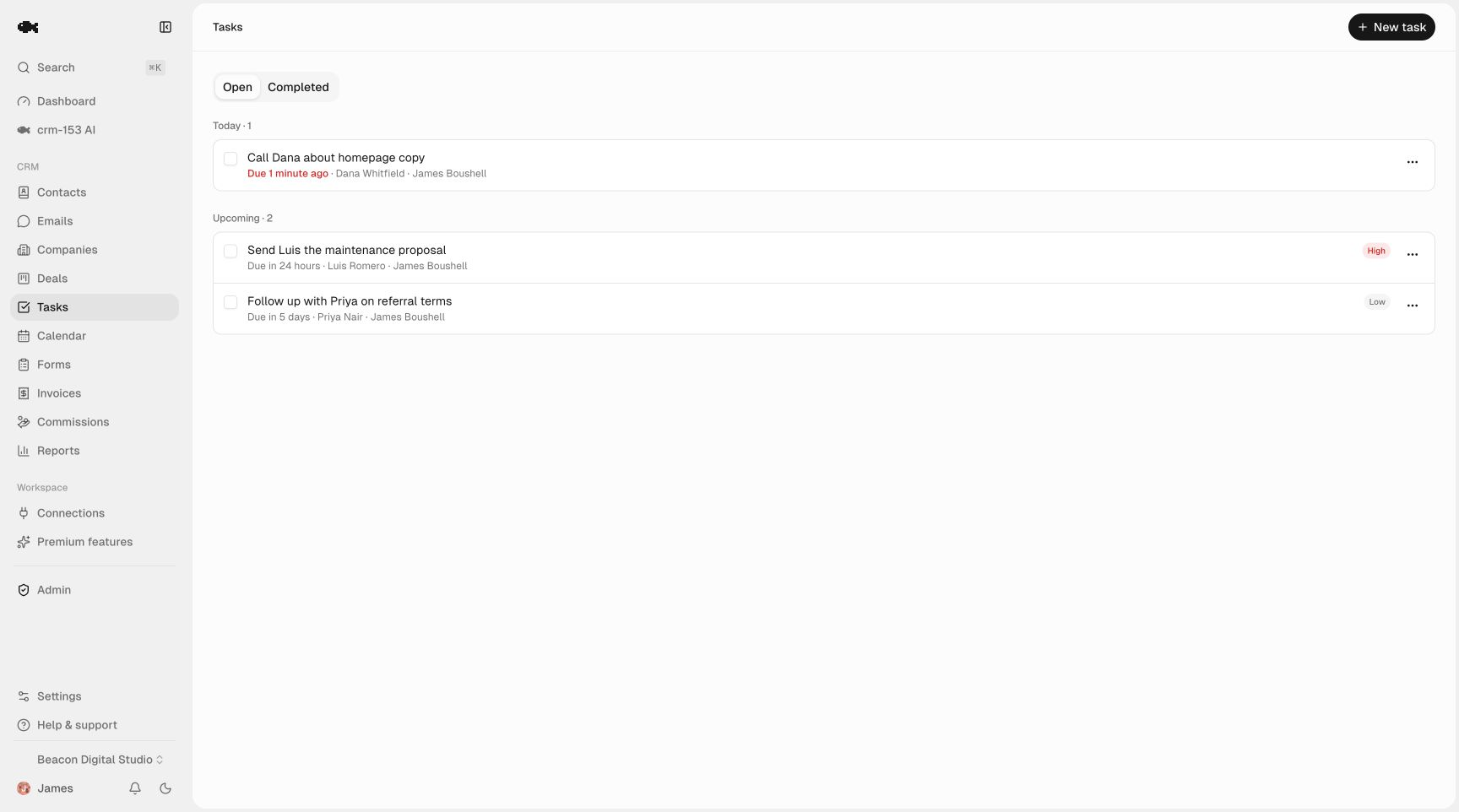
Tasks and reminders give you Today / Overdue / Upcoming views plus email nudges, so no investor thread dies because everyone assumed a cofounder had it handled.
What to defer until you have a sales team
Resist the urge to configure everything now. These can wait:
- Lead scoring and complex qualification fields. With a dozen deals, you know each one by heart. Add structure when volume forces it.
- Reporting dashboards. Win-rate reports matter once you have enough closed deals to be statistically meaningful — not at deal number four.
- Custom roles and permissions. Founders should all see everything. Lock things down when you hire SDRs, not before.
- Heavy process automation. Early sales is high-touch and bespoke; scripting it too soon makes you look robotic and hides what's actually working.
Build the habit now — log conversations, set the next step — and let the structure grow with the company.
So what's the best CRM for startups?
The honest answer: the one that gets your whole team tracking conversations today, keeps your data portable, and doesn't bill per founder. crm-153 fits that brief — the pipelines, contacts, timeline, tasks, and unlimited seats above are all free, with no contact cap and no paid tier. The business model is a small optional fee on online invoice payments, nothing else, which you can read in full on the pricing page. If you're skeptical that "free" is real, that's fair — see how can a CRM be free? and then poke around a live workspace before committing a single contact.
When you're ready, start free — no credit card, no trial clock. Import your angel list, build your two pipelines, and get back to the raise.